Monday, June 8, 2026 0 min read Industry Insights
What Is an Offender Management System? A Guide for Modern Corrections
Discover what an offender management system is, how it supports modern corrections, and why integrated OMS platforms are essential today.
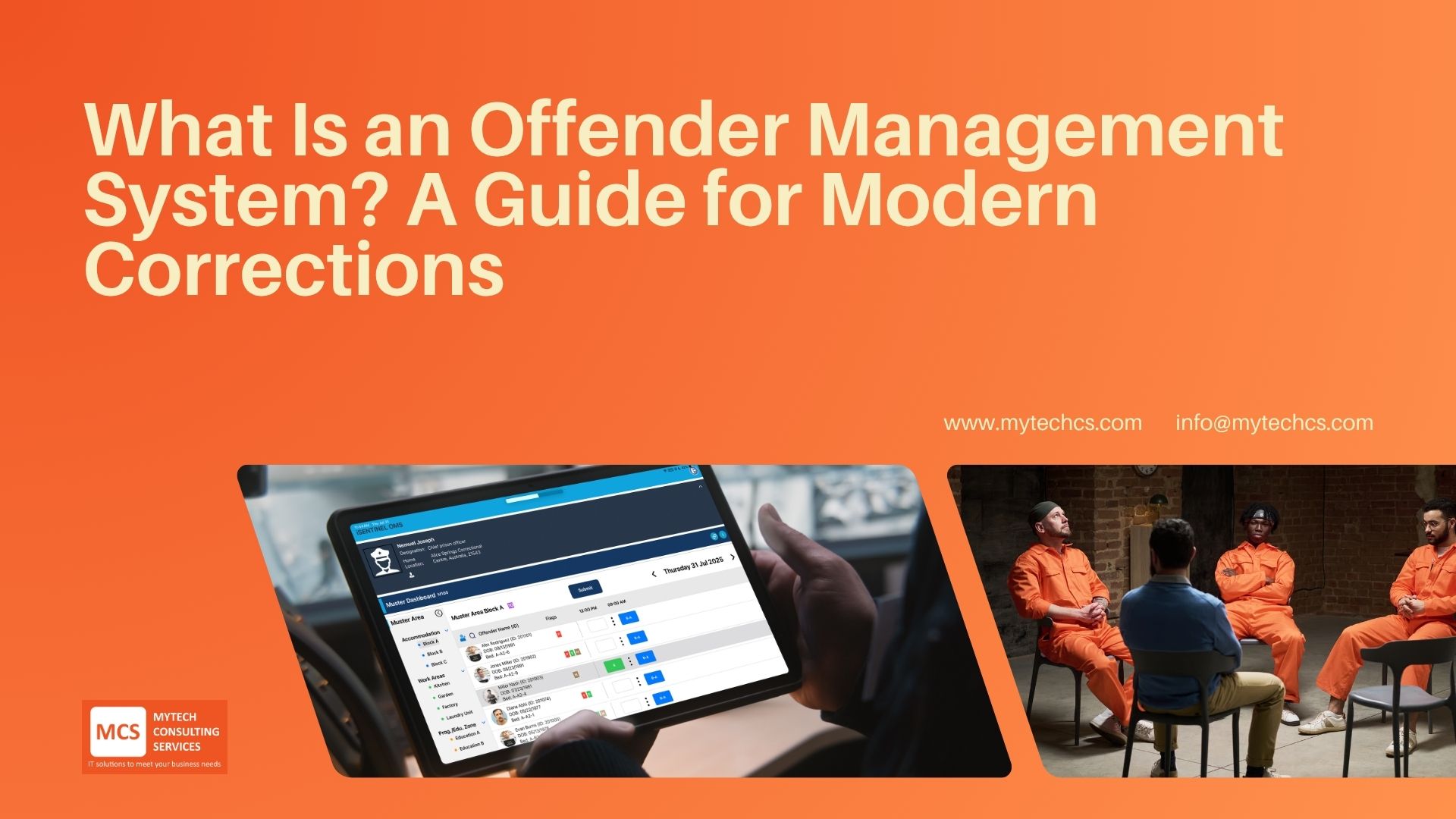
Digital transformation is reshaping how justice and correctional agencies operate. As facilities grow more complex and data volumes increase, manual or fragmented systems are no longer sustainable. This is where an offender management system becomes critical—providing the digital backbone needed to manage offenders securely, efficiently, and transparently across their entire lifecycle.
What Is an Offender Management System?
An offender management system (OMS) is a centralized digital platform designed to manage offender information from intake through release and reintegration. It serves as a single source of truth for correctional institutions and justice agencies, enabling consistent data capture, real-time visibility, and structured decision-making.
Modern offender management platforms replace siloed databases and paper-based workflows with secure, role-based access to offender data. This approach improves operational efficiency while supporting compliance, safety, and long-term rehabilitation outcomes.
At its core, an offender management system supports custodial and community corrections by connecting people, processes, and information within one integrated environment.
How an Offender Management System Works
A modern offender management system consolidates critical data into one unified platform, providing officers, administrators, and decision-makers with real-time access to accurate information.
Typical capabilities include:
- Offender profiles and biometric identification
- Custody status, classifications, and sentence calculations
- Housing assignments, movements, and transfers
- Case history, legal documentation, and court records
- Program participation, behaviour tracking, and incident management
By centralising these data points, an offender management system reduces duplication, minimises errors, and significantly lowers administrative overhead. Staff can focus less on manual data entry and more on safety, rehabilitation, and compliance.
Well-designed OMS platforms also support automation—triggering workflows for admissions, assessments, breaches, parole reviews, and release processes—ensuring consistency across facilities and teams.
Why Integration Is Critical in Corrections Management
The real value of an offender management system emerges when it operates as part of an integrated management system rather than a standalone application.
Integration enables offender management platforms to connect seamlessly with:
- Court and case management systems
- Police and law enforcement databases
- Visitor and access control platforms
- Medical, mental health, and healthcare systems
- Reporting, analytics, and intelligence tools
This interconnected ecosystem ensures that all stakeholders—from frontline officers to parole boards—work with the same up-to-date information. An integrated management system improves response times, reduces manual reconciliation, and enhances decision accuracy across the justice workflow.
From an IT perspective, integration also supports long-term scalability and interoperability, ensuring systems can evolve as policies, regulations, and technologies change.
Why Offender Management Systems Matter Today
Correctional agencies today face increasing demands around accountability, transparency, and measurable outcomes. A well-implemented offender management system directly supports these priorities by enabling smarter operations and stronger governance.
Key benefits include:
- Improved inmate tracking and movement control
- Reduced reliance on manual paperwork and spreadsheets
- Stronger compliance with regulatory and audit requirements
- Enhanced safety for staff and incarcerated individuals
- Data-driven insights for policy and operational decisions
For government agencies and justice departments, an offender management system also plays a vital role in reducing reoffending rates by supporting structured rehabilitation programs and coordinated case management.
Supporting Smarter Corrections Through Technology
As correctional facilities modernise, offender management systems are no longer optional—they are foundational infrastructure. Many agencies are now seeking solutions delivered by experienced Sydney IT consultants and specialist justice technology partners who understand both compliance and operational realities.
Working with an IT service provider in Australia that has domain expertise in criminal justice ensures the system is secure, scalable, and aligned with local regulations. This is especially important when offender management systems are delivered alongside broader software development services in Australia, where customisation and integration are often required.
Modern OMS platforms are increasingly modular, allowing organisations to adopt custodial management, community supervision, analytics, and reporting capabilities at their own pace—without disrupting existing operations.
Moving Toward Integrated, Future-Ready Corrections
The future of corrections lies in connected, data-driven systems that support safety, rehabilitation, and public trust. An integrated, well-governed offender management system provides the foundation needed to achieve these goals.
By moving away from fragmented tools and toward unified digital platforms, correctional institutions can improve operational performance while preparing for future expansion, regulatory change, and innovation. For decision-makers leading digital transformation initiatives, investing in an offender management system is a strategic step toward smarter, more resilient corrections.
Frequently Asked Questions (FAQ)
What is an offender management system used for?
An offender management system is used by correctional facilities and justice agencies to manage, track, and monitor individuals throughout their interaction with the criminal justice system. This includes intake, assessments, custody status, movements, program participation, community supervision, and release. By centralising offender data, agencies gain better visibility, accuracy, and control over operations.
How does an offender management system improve correctional operations?
A modern offender management system improves correctional operations by reducing manual paperwork, automating workflows, and providing real-time access to offender information. This leads to faster decision-making, improved compliance with regulations, and enhanced safety for both staff and incarcerated individuals. It also supports reporting, audits, and long-term operational planning.
What is the difference between an offender management system and an integrated management system?
An offender management system focuses specifically on managing offender data and lifecycle processes, while an integrated management system connects the OMS with other critical platforms such as courts, police systems, healthcare, visitor management, and analytics tools. Integration ensures consistent data sharing across agencies and enables end-to-end visibility across the justice ecosystem.
Why is integration important in offender management systems?
Integration is essential because correctional agencies rely on multiple systems to operate effectively. An integrated offender management system reduces data silos, minimises errors caused by duplicate records, and ensures all stakeholders are working with up-to-date information. This improves coordination between custodial and community corrections and supports faster, more accurate responses to incidents and case changes.
Who should be involved in selecting an offender management system?
Selecting an offender management system should involve IT leaders, operational managers, compliance officers, and executive decision-makers. Collaboration ensures the system meets technical requirements, aligns with legal obligations, and supports day-to-day operational needs. Many organisations also engage Sydney IT consultants or an experienced IT service provider in Australia to guide system design, integration, and implementation.
Can offender management systems be customised for different jurisdictions?
Yes. Most modern offender management systems are modular and configurable, allowing agencies to tailor workflows, reporting, and integrations to local laws, policies, and operational structures. This flexibility is particularly important when working with providers offering specialised software development services in Australia, where local compliance and scalability are key considerations.
Are offender management systems secure?
Security is a core component of any offender management system. These platforms typically include role-based access controls, audit trails, data encryption, and secure authentication mechanisms. When implemented by experienced justice-focused IT partners, offender management systems are designed to meet government security and compliance standards while protecting sensitive offender data.
Related Article: Top Trends in System Integration for Modern Enterprises